Implantable Energy Relay Architecture

Patent Reference: US Patent 10,179,244 B2

Inventor: Richard LeBaron

THE CHALLENGE:

Providing consistent wireless power to deep-tissue implants often requires high-intensity external fields that can lead to energy loss, heat dissipation issues, or bulky wearable transmitters. The engineering objective was to bridge this gap by creating a secondary, passive energy relay that captures external RF energy and concentrates it directly at the implant site, overcoming the natural attenuation of biological tissue.

THE ENGINEERING SOLUTION:

This invention introduces a sophisticated “Energy Bridge” that decouples the external transmitter from the deep-tissue receiver to maximize efficiency.

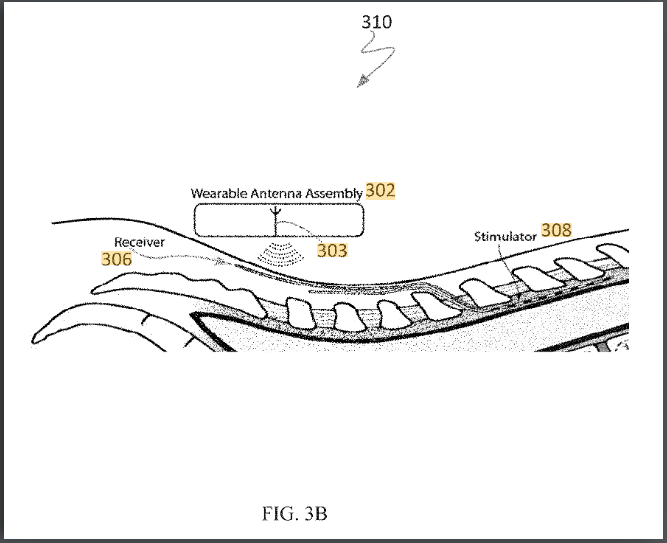
  • The Relay Mechanism: The system utilizes an intermediate relay module that acts as a passive concentrator. It receives energy from a primary external antenna and re-radiates it in a highly localized field, ensuring the deep-tissue implant receives a stable power link.
  • Field-Proven Reliability: While the complexity of specific integrated implants has evolved, this relay architecture remains a field-proven solution for extending the depth and stability of wireless power links in high-loss environments.
  • Optimized Link Budgets: By managing the transition between external air-gaps and internal tissue dielectrics, the relay ensures that power delivery is focused exactly where it is needed, reducing the power requirements of the primary wearable device.

PATENT IMAGES:

US Patent 10,179,244 B2 Fig 3B

Consult with Mehor Solutions to utilize field-proven relay architectures for your deep-tissue power and data challenges.